

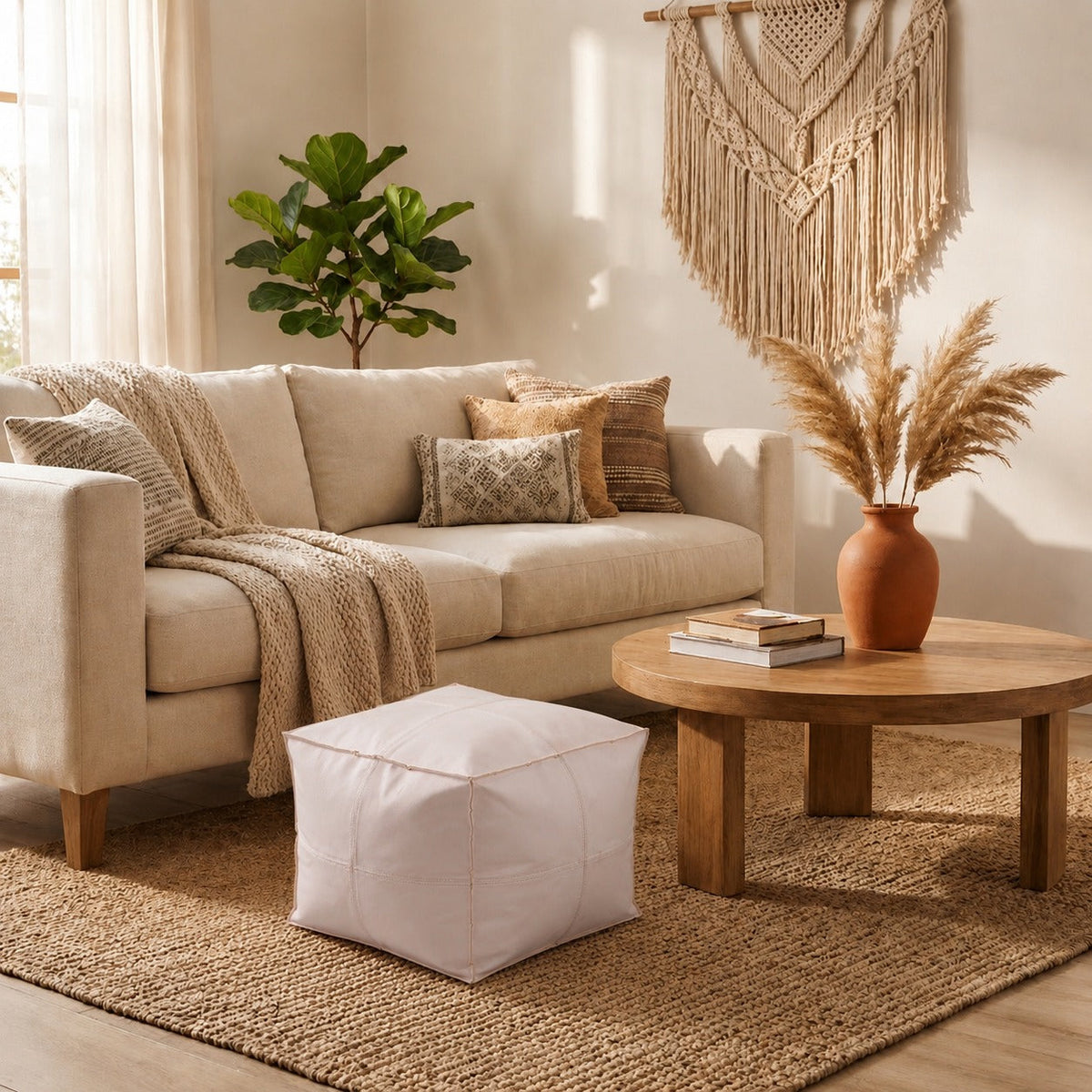
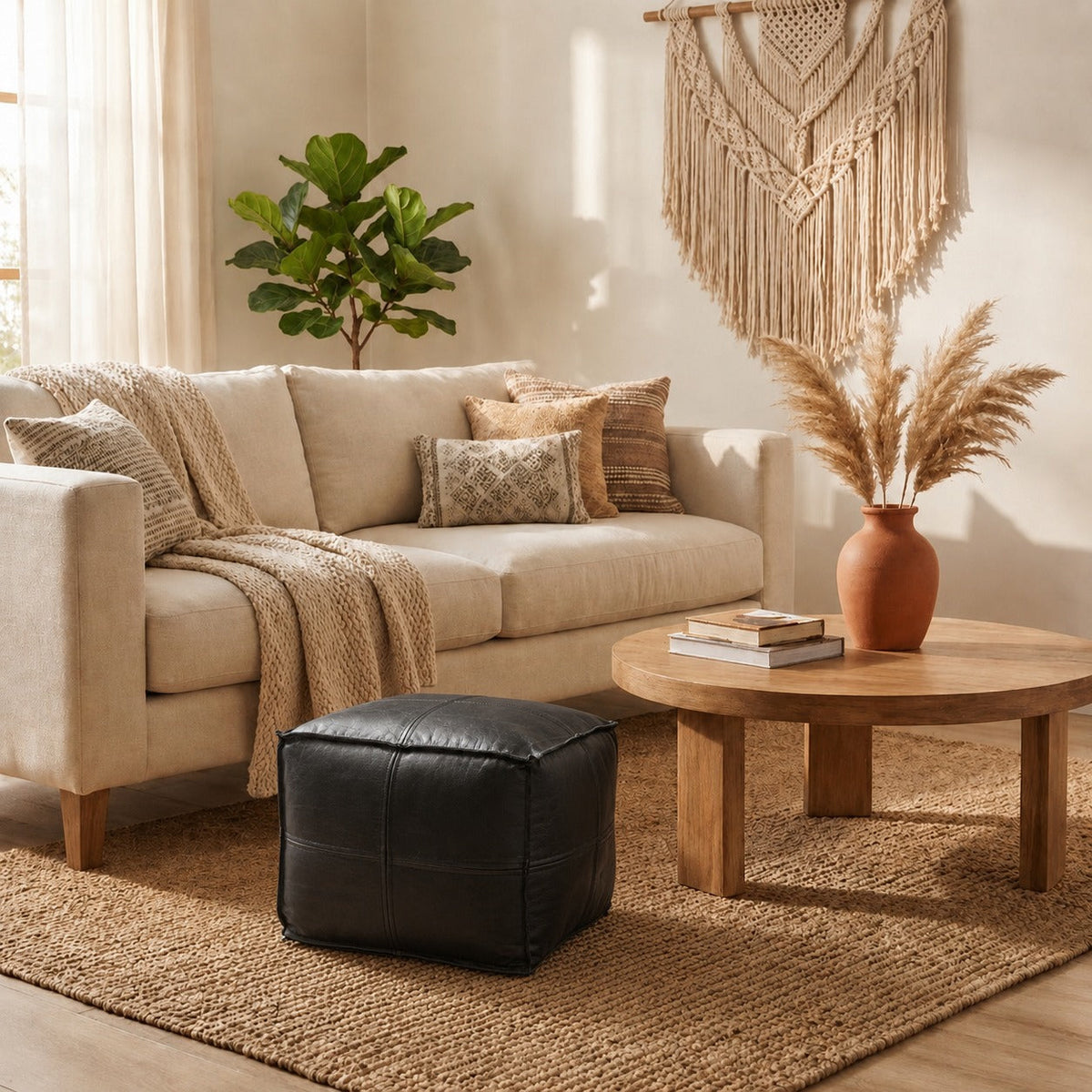
Leather Ottoman vs. Fabric Ottoman: Which Lasts Longer?
Leather or fabric? How the two compare on durability, stains, pets, comfort and value, and when fabric still makes sense.
Leather or fabric? Both make a comfortable ottoman, but they age very differently. If you want a piece that still looks good after years of feet, trays, kids and pets, the material matters more than almost anything else.
Here is how the two compare on durability, cleaning, comfort and value, so you can choose the one that fits the way you live.
The Short Answer
For most homes, a real leather ottoman lasts longer. Leather resists wear, wipes clean and softens with age, while fabric tends to pill, stain and fade with daily use. Fabric still makes sense in a few situations, which we cover below.
1. Durability: How Each Material Wears
An ottoman takes more abuse than most furniture. People rest their feet on it, sit on its edges, slide trays across it and move it around the room.
- Leather is a natural hide with a dense, fibrous structure. Instead of wearing thin, it softens and develops a patina, a deeper color and gentle sheen that comes with use.
- Fabric is woven from fibers that rub against each other every time you use it. Over time, many fabrics pill, thin out at the edges and lose their shape, especially on the top surface where feet and trays land.

One caveat: leather must be real. Bonded leather and faux leather (PU or PVC) can peel and crack within a few years. Our leather ottoman buying guide explains how to tell the difference.
2. Cleaning and Stains
This is where leather pulls furthest ahead.
- Leather: most spills sit on the surface for a moment, so you can wipe them away with a dry or slightly damp cloth. Crumbs and dust brush off easily.
- Fabric: liquids soak into the fibers quickly. Coffee, wine and food stains often need spot cleaning or upholstery cleaner, and some never fully come out.
If your ottoman doubles as a coffee table with a tray, leather is the far easier choice to live with.

3. Pets, Kids and Allergies
Real life is the true test, so here is the honest picture.
- Pet hair and dust sit on top of leather and wipe away. Fabric tends to hold on to hair, dust and dander, so it needs regular vacuuming.
- Claws can scratch leather. Light marks often blend into the patina over time, while claws can snag and pull the threads of a woven fabric.
- Kids spill. Leather forgives sticky fingers and juice far better than fabric does.
If anyone in your home is sensitive to dust, a smooth leather surface is simply easier to keep clean.
4. Comfort and Feel
Fabric feels soft and warm the moment you touch it. Leather can feel cool at first, then quickly warms to your body temperature. A well-made leather ottoman is supple rather than stiff, and it becomes softer with every year of use.
Comfort also depends on the filling. A firm fill keeps a crisp shape for sitting, while a softer fill feels more relaxed under your feet. That is why our square leather ottomans come with a choice of firm or soft seating.
5. How It Looks Over Time
A new fabric ottoman often looks its best on the first day. Sunlight fades it, use flattens it and stains build up.
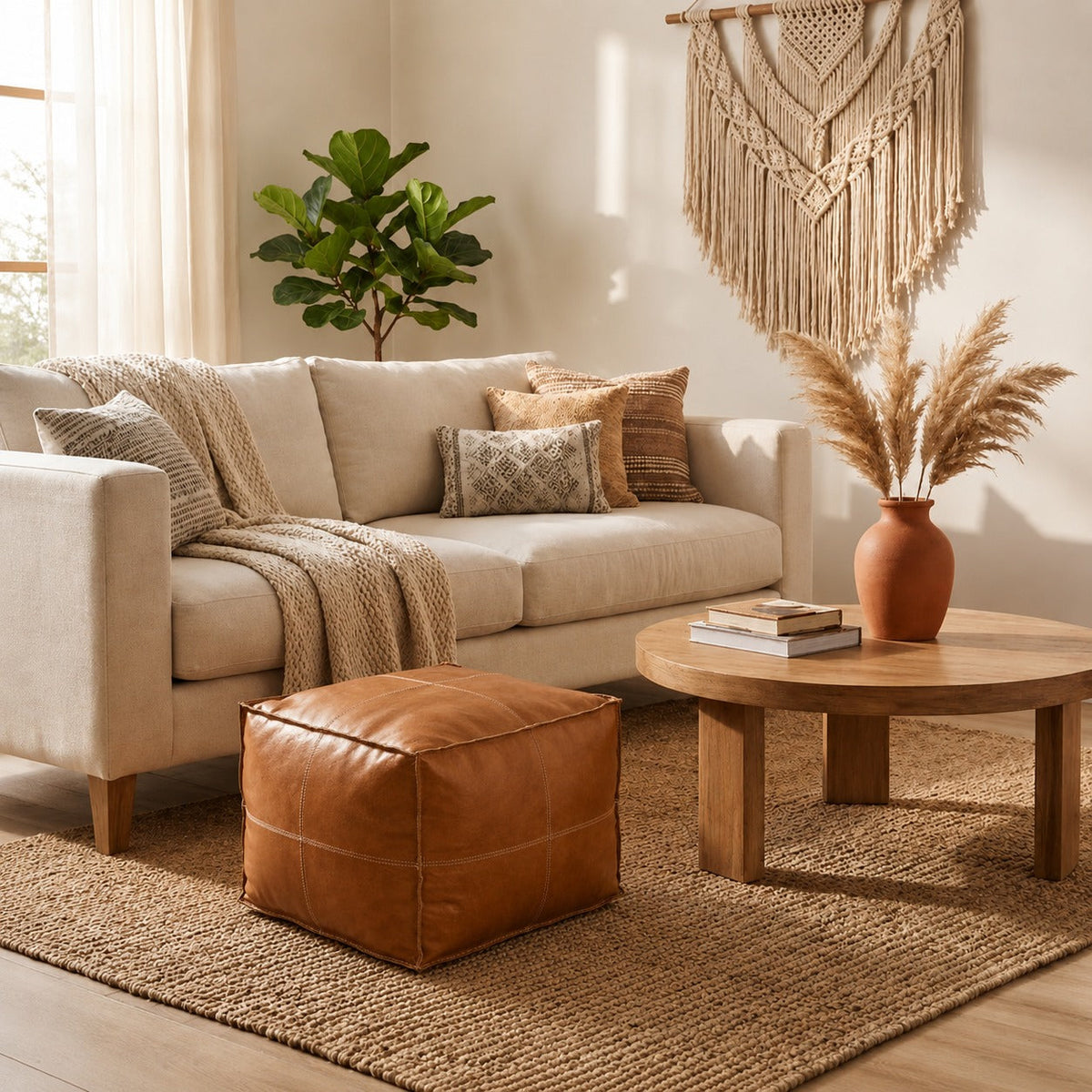
Leather tells the opposite story. Vegetable-tanned leather, the kind used for our square ottomans, deepens in color and takes on a soft patina, so the piece gains character instead of looking tired.

Square, dark brown

Round, hand-embroidered burgundy
6. Price and Value
Fabric ottomans usually cost less up front. Real leather costs more, but it also lasts longer, so the cost per year of use is often lower. Replacing a worn fabric ottoman every few years quickly adds up.
A handmade leather ottoman is also easier to keep looking new: a leather conditioner once or twice a year does most of the work. For a real cost-per-year example and a simple care routine, see is a leather ottoman worth it?
Leather vs. Fabric at a Glance
| Real leather | Fabric | |
|---|---|---|
| Durability | Softens and develops a patina | Can pill, thin and lose shape |
| Spills | Wipe away quickly | Soak in and may stain |
| Pet hair and dust | Wipe off the surface | Cling to the fibers |
| Claws | Can leave light scratches | Can snag threads |
| Feel | Cool at first, warms quickly | Soft and warm right away |
| Up-front price | Higher | Lower |
| Over the years | Gains character | Fades and wears |
When Fabric Still Makes Sense
- You want a specific pattern or color to match a fabric sofa exactly.
- The ottoman will sit in strong direct sunlight all day, which can fade and dry out leather.
- You plan to replace it in a year or two and want the lowest price.
For everything else, from family living rooms to rentals that need to look good in every guest's photos, leather is the longer-lasting choice.
Choosing Your Leather Ottoman
Our square leather ottomans are cut from genuine vegetable-tanned leather and hand-stitched in Morocco, in six colors, with firm or soft seating. Our round leather poufs are made from genuine goat leather with hand embroidery, in more than 25 colors. Browse every shape in our leather ottomans and poufs collection. Shipping is always free.
To keep yours looking its best, see our tips on stuffing a leather pouf and 8 ways to style one. Furnishing the bedroom too? Read our comparison of leather vs. fabric headboards.
Frequently Asked Questions
Is a leather ottoman more durable than fabric?
Yes, as long as it is real leather. Genuine leather softens and develops a patina with use, while fabric tends to pill, stain and fade. Bonded and faux leather are the exception: they can peel within a few years.
Is leather or fabric better for pets?
Leather is easier to keep free of pet hair and dander, and it does not snag. Claws can leave light scratches, which often blend into the patina over time.
How do you clean a leather ottoman?
Wipe spills right away with a dry or slightly damp cloth, dust it regularly and apply a leather conditioner once or twice a year. Keep it out of strong direct sunlight.
Is a leather ottoman worth the extra cost?
For most homes, yes. It lasts longer and looks better with age, so the cost per year of use is often lower than replacing a fabric ottoman.