


Is a Leather Ottoman Worth It? Pros, Cons and Care
The honest pros and cons of a leather ottoman, the real cost over time, who it suits best and a simple care routine to make it last.
A leather ottoman costs more than a fabric one, so it is fair to ask whether it is worth it. The honest answer: for most homes, yes, as long as you buy real leather and give it a few minutes of care a year. Here is the full picture, including the downsides.
The Pros
1. It lasts for years, not seasons
Real leather is a natural hide with a dense, fibrous structure. It does not pill or wear thin the way many fabrics do. With basic care, a well-made leather ottoman handles daily feet, trays and guests for many years.
2. It looks better with age
Vegetable-tanned leather deepens in color and develops a soft patina as it is used. Small marks blend into that patina, so the piece gains character instead of looking worn out.

3. It is easy to keep clean
Spills sit on the surface long enough to wipe away. Dust, crumbs and pet hair brush off instead of working into the fibers.
4. It does three jobs
One leather ottoman is a footrest, an extra seat and, with a tray on top, a small coffee table. Because it is light and has no legs, you can move it from room to room as you need it.
5. Every piece is one of a kind
A handmade leather ottoman carries small variations in tone and stitching. On a piece cut and stitched by hand, those details are proof of the craft.
The Cons
No material is perfect. Here is what to know before you buy.
- Higher price up front. Real leather costs more than fabric or faux leather.
- It can scratch. Pet claws and sharp objects can leave marks. Light scratches often soften into the patina, but they will not disappear completely.
- It does not like strong sun. Hours of direct sunlight every day can fade and dry out leather over time.
- It needs a little care. A leather conditioner once or twice a year keeps it supple.
- Natural variation. If you want every piece to look perfectly identical, handmade leather may not be for you.

The Real Cost Over Time
The sticker price is only half the story. A simple way to compare is the cost per year of use.
For example, a leather ottoman that costs $150 and lasts ten years works out to about $15 a year. A $60 fabric ottoman that looks tired after two or three years and needs replacing costs $20 to $30 a year, and you shop for it again and again.
If you compare leather and fabric in more detail, our leather vs. fabric ottoman comparison looks at durability, stains, pets and comfort side by side.
Who a Leather Ottoman Is Worth It For
- Families who need a piece that forgives spills and daily use.
- Pet owners who are tired of vacuuming hair out of fabric.
- Small spaces where one piece has to work as a seat, a footrest and a table.
- Airbnb and vacation rental hosts who want a room that looks styled in every listing photo and holds up to guest after guest.

For rental hosts, a leather ottoman adds the warm, Scandinavian-yet-rustic look that makes a listing stand out. Our guide to styling a rental bedroom with leather and teak has more ideas.
How to Care for a Leather Ottoman
A few minutes of care is what makes leather worth the investment. Here is a simple routine.
Every week
- Dust it with a dry, soft cloth or a soft brush.
- Wipe away crumbs and pet hair.
When something spills
- Blot the spill right away with a dry cloth. Do not rub.
- Wipe the area with a cloth that is only slightly damp, then let it air dry.
- Avoid harsh cleaners, solvents and household sprays.
Once or twice a year
- Apply a leather conditioner with a soft cloth, following the product's instructions.
- Test any new product first on a small, hidden spot.
Always
- Keep it out of strong direct sunlight and away from radiators and fireplaces.
- For a light scratch, rub it gently with a clean finger. The natural oils in the leather often soften the mark.
Keep its shape
Over time, the filling settles. If your pouf has a zipper, open it and add or rearrange the filling to bring back a firm, even shape. Our guide to stuffing a leather pouf shows how.

The Verdict
A leather ottoman is worth it if you want one piece that lasts, cleans up easily and looks better every year. Fabric only wins on up-front price, or if you need a very specific pattern.
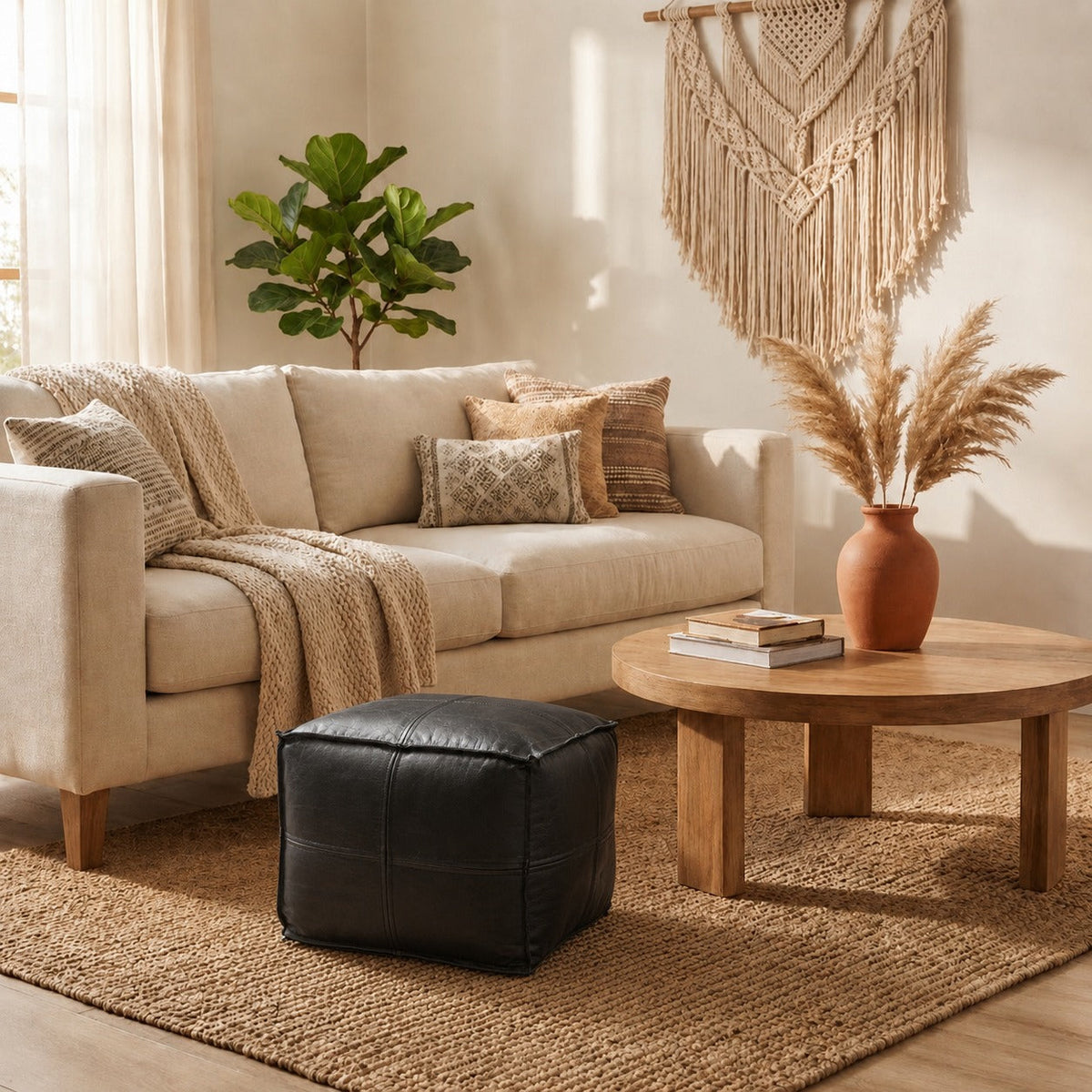
The key is buying real leather. Our square leather ottomans are cut from genuine vegetable-tanned leather and hand-stitched in Morocco, and our round leather poufs are made from genuine goat leather with hand embroidery. Explore every shape and color in our leather ottomans and poufs collection, or start with our leather ottoman buying guide. Shipping is always free.
Frequently Asked Questions
Is a leather ottoman worth the money?
For most homes, yes. Real leather lasts longer than fabric, cleans more easily and looks better with age, so the cost per year of use is often lower.
How long does a leather ottoman last?
A well-made ottoman in real leather can last many years with basic care: regular dusting, quick cleanup of spills and a conditioner once or twice a year.
Do leather ottomans scratch easily?
Leather can scratch, especially from pet claws. Light scratches often blend into the patina over time, and gently rubbing them can soften the mark.
How often should I condition a leather ottoman?
Once or twice a year is enough for most homes. Condition more often if the ottoman sits in a dry room or near a heat source.